The Courageous Journey of Young Rohingya Activist Shakil Akter: From Forced Displacement and Family Persecution to Defending Human Rights
About Article
Forced to flee Myanmar as a child, Shakil Akter has transformed his experiences of persecution and displacement into a commitment to documenting human rights violations, supporting vulnerable people, and advocating for the rights and dignity of the Rohingya community. Despite the reported targeting of his family, he continues his work as a young human rights defender in the refugee camps of Cox’s Bazar, Bangladesh.
Introduction: Turning Adversity into Advocacy
For many Rohingya refugees, displacement has meant losing their homes, livelihoods, educational opportunities, and the security of their communities. For some, however, these experiences have also strengthened their determination to challenge injustice and help protect others from harm.
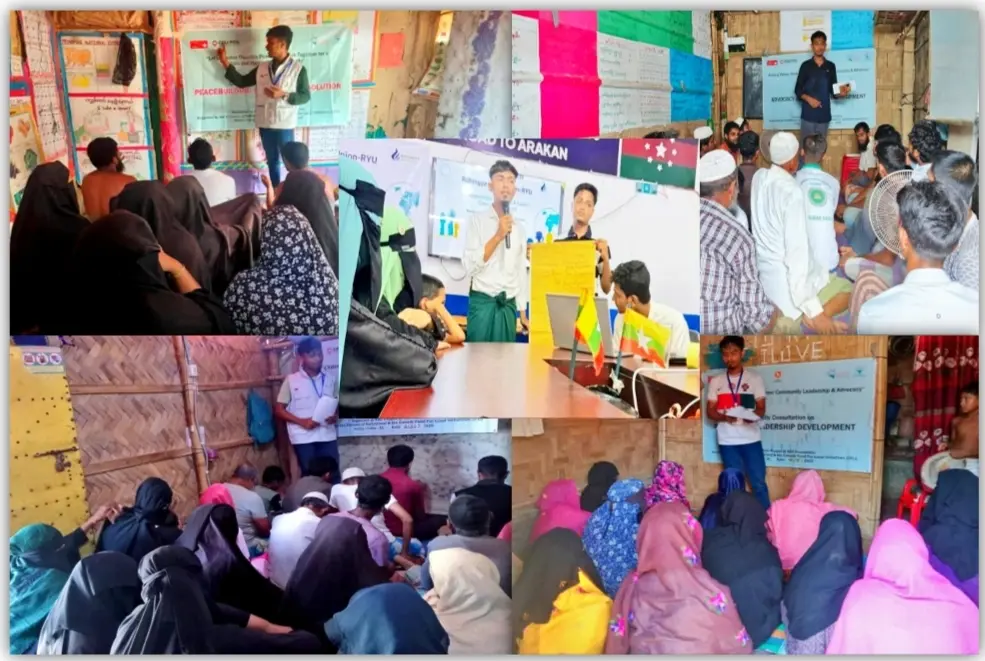
Shakil Akter, a 24-year-old Rohingya human rights defender known as Peace Seeker Shakil, is one such individual. Having experienced forced displacement from Myanmar and witnessed the difficulties confronting his community in Bangladesh, he has dedicated much of his youth to human rights research, documentation, reporting, and advocacy.
His work focuses on identifying and documenting alleged human rights violations, communicating concerns to relevant stakeholders, and encouraging young Rohingya to participate in community protection initiatives. Through his involvement with several Rohingya-led civil society organizations, he has developed experience in coordinating community members, collecting information, and promoting awareness of human rights issues.
His journey is not simply a story of professional development. It is also a story of family history, personal loss, forced migration, economic hardship, and the determination to continue serving others despite insecurity. For Shakil, human rights advocacy is deeply personal. His family's experiences of persecution and displacement, together with the violence his father has reportedly experienced, have reinforced his belief that every individual deserves safety, dignity, and freedom from violence.
Early Life in Myanmar: A Family Rooted in Community Leadership
Shakil Akter was born in Kyet Yoe Pyine Village, Maungdaw Township, Rakhine State, Myanmar. He is the son of Akter Kamal and Noor Fatema, also known as Toha. His family has a longstanding history of community leadership and public service. According to the family history shared for this article, his grandfather, the late Habi Ahamed, served as a village administrator for 22 years across five consecutive terms. His uncles, Mustafa Kamal and Mg Mg Gyi, also held leadership positions in the village.
This family background formed part of the environment in which Shakil grew up. His forefathers were known for their involvement in community affairs and their efforts to address local concerns. Before the family's displacement, they also managed a well-known market in the village, reportedly maintained by the family across several generations.
Despite their established community connections, the family experienced the insecurity and persecution that affected many Rohingya in Myanmar. As conditions deteriorated, they were eventually forced to leave their homeland and seek safety across the border in Bangladesh. The loss of their home, livelihood, and familiar community environment marked a major turning point in Shakil's childhood.
Childhood, Education, and Family Responsibilities
Before displacement interrupted his education, Shakil followed a structured daily routine combining religious learning and formal schooling. His day began with Fajr prayers, followed by Islamic studies at the local maktab and attendance at the village middle school, where he was studying in Grade 8.
As the eldest of five siblings, including two brothers and three sisters, he also occupied an important position within the family. His mother died when he was young, leaving the family to cope with a significant personal loss while his siblings were still children. These early experiences exposed him to family responsibilities and hardship at a young age.
Although his childhood in Myanmar was disrupted by violence and displacement, his commitment to education continued after the family reached Bangladesh. His determination to continue learning would later complement his involvement in human rights activities.
Forced Displacement in 2017: Beginning Again in Bangladesh
In 2017, escalating violence in Rakhine State forced Shakil and his family to flee Myanmar and seek refuge in Bangladesh. They settled in the refugee camps of Cox's Bazar, where they faced the difficult task of rebuilding their lives in an unfamiliar environment. Like many displaced Rohingya families, they struggled with financial insecurity, limited livelihood opportunities, and the challenge of meeting basic needs. Continuing education under these circumstances required considerable determination and sacrifice.
Despite these obstacles, Shakil completed the second year of higher secondary education at a community-led high school. His father, Akter Kamal, later secured a position with the Norwegian Refugee Council (NRC) as a mentor teacher, earning approximately 13,000 Bangladeshi taka per month. This employment provided some financial stability for the household, although the broader difficulties of refugee life remained.
For Shakil, the experience of displacement revealed how conflict and persecution can disrupt not only individual lives but also family stability, education, and opportunities for the younger generation. These experiences became an important part of his motivation to understand and address the challenges facing his community.
Discovering Human Rights Advocacy
Shakil's commitment to human rights developed through a combination of family influence, personal experience, and direct observation of conditions in the refugee camps.
He became increasingly concerned about the reported human rights violations, intimidation, violence, and other harmful activities affecting Rohingya refugees. He also observed how insecurity could undermine trust, disrupt community relationships, and leave vulnerable individuals struggling to seek assistance. His family's history gave these concerns a personal dimension. According to Shakil, his forefathers had worked for the betterment of their community and spoken up for people's rights.
He describes his own motivation in the following words: “I chose this field because I am a survivor, and my family is also a survivor of human rights violations.”
This perspective helped shape his decision to become involved in human rights activities rather than remain a passive observer of the difficulties confronting his community. Beginning in 2020, he participated in workshops and training sessions that strengthened his understanding of human rights, social cohesion, gender-based violence, documentation, and reporting. These opportunities helped him develop practical knowledge and engage more systematically with human rights concerns.
His areas of interest include gender-based violence, labour rights, and crimes against humanity, alongside broader protection and accountability issues affecting the Rohingya population. Over time, his participation in training and community activities developed into more sustained responsibilities within Rohingya-led civil society organizations.
Building a Foundation Through the Rohingya Youth Association
In 2020, Shakil joined the Rohingya Youth Association (RYA), where he served as a camp coordinator.
This role provided opportunities to engage with community members and develop his understanding of human rights and related protection issues. Through RYA, he participated in more than 12 training sessions, according to information provided for this article. These covered subjects including human rights, social cohesion, gender-based violence, documentation, and reporting. The training helped him understand how concerns affecting individuals and families could be recorded and communicated to relevant stakeholders.
His involvement also strengthened his appreciation of the role of Rohingya-led civil society organizations in encouraging youth participation, raising awareness, and identifying community protection needs. For Shakil, these experiences were important because they connected theoretical knowledge with the realities of daily life in the refugee camps.
He began to recognize that effective human rights work requires not only knowledge of rights and violations but also the ability to listen carefully, communicate responsibly, and understand the circumstances of affected people. His early experience with RYA established a foundation for his subsequent work in research, documentation, and advocacy.
Expanding Community Advocacy Through RYAN
In 2023, Shakil received an opportunity to serve as Program Coordinator at the Rohingya Youth Advocacy Network (RYAN). In this role, he became involved in coordinating community-based research, documentation, and reporting activities focused on alleged human rights violations in the refugee camps.
His responsibilities include working with a wider team, encouraging young people to participate in human rights initiatives, and strengthening communication networks through which community concerns can be identified and reported. Through these activities, he has sought to promote collective responsibility for human rights protection rather than leaving the work to a small number of individuals. His approach emphasizes the importance of empowering young people with the knowledge, confidence, and practical skills needed to contribute meaningfully to their communities.
Reflecting on his experience, Shakil explains: “Working with such a team has brought me two major benefits. First, I have developed my own understanding of human rights. Second, I have learned to understand and support others. Every day, I communicate with new people, listen to their experiences and emotions, and build a wider network within the refugee camps. This network empowers people to work together on human rights.”
His account illustrates how community-based human rights activities can serve two complementary purposes: documenting violations and developing the capacity of people to respond collectively to injustice. For Shakil, every conversation with an affected person offers an opportunity to better understand their circumstances and identify concerns that might otherwise remain unreported.
Documenting Human Rights Violations and Supporting Survivors
A central component of Shakil's work is the collection of information concerning alleged human rights violations and the reporting of cases to relevant stakeholders.
He states that he has documented more than 5,000 human rights violation cases through his activities. He also says that some survivors whose cases he documented have subsequently become safer and continue to communicate with him. These figures and outcomes are based on his account. The precise number and classification of cases would need to be established through an appropriate review of the underlying records.
Nevertheless, his stated experience reflects his sustained involvement in community-based documentation and his commitment to maintaining contact with people who have shared their experiences. Human rights documentation can help bring violations to the attention of relevant organizations and stakeholders. Properly collected information may contribute to identifying patterns of abuse, understanding protection risks, and informing appropriate responses.
However, documentation in an insecure environment carries significant responsibilities. Survivors may fear retaliation, discrimination, or further harm if their identities or experiences become public. Information must therefore be collected and handled with attention to informed consent, confidentiality, accuracy, and the safety of those concerned.
For Shakil, the work involves more than recording incidents. It also requires listening to people who may be experiencing fear, distress, and uncertainty. He believes that the ultimate purpose of this work is to help people live safely and peacefully, with the freedom to make decisions about their own lives.
Explaining his motivation, he says: “I feel very proud to have chosen the field of human rights. Through my activities, I have documented more than 5,000 cases of human rights violations and reported them. Among the cases I have documented, some survivors are now safer and continue to communicate with me. Their appreciation means a great deal to me. I believe it is essential for every person to be safe, to have choices, and to live peacefully. Human rights violations must stop if our society is to achieve peace.”
His words convey the central principle behind his advocacy: that security, dignity, freedom of choice, and peace are inseparable from respect for human rights.
Continuing His Work Through Case Management and Regional Advocacy
Shakil's involvement in human rights work has extended beyond youth coordination and community-based documentation.
In 2025, he received an opportunity to work as a case management worker through a project under the Rohingya Advocacy Center (RAC). According to the information provided, the project has since ended. This experience offered another opportunity to engage with issues affecting vulnerable people and gain practical exposure to case-related support within the humanitarian context.
In 2026, Shakil joined the Human Rights Research and Advocacy Centre (HRRAC), a refugee-led initiative working on human rights research, documentation, and advocacy across the Bay of Bengal region.
He currently serves as a Human Rights Research Associate.
His involvement with these organizations reflects a progression from youth participation and community coordination toward research and documentation responsibilities within a broader human rights framework. Across these roles, his focus has remained consistent: understanding the challenges confronting vulnerable people, documenting alleged violations, and contributing to efforts that promote human dignity and accountability.
His experience also demonstrates the potential contribution of Rohingya youth to humanitarian and human rights initiatives. Young people who understand their community's language, social circumstances, and protection challenges can help identify concerns and communicate affected people's experiences. To carry out this work effectively, however, they need appropriate training, resources, institutional cooperation, and protection from threats or retaliation.
Reported Violence Against His Father in 2023
While Shakil has devoted his time to documenting human rights concerns affecting others, his own family has reportedly experienced serious violence. According to the information provided for this article, his father was shot in the left leg during an incident in 2023 involving armed group members.
At approximately 10 p.m., Akter Kamal was at a shop preparing to watch a football match on television when a group of armed individuals arrived and began firing toward the shop. A bullet struck his left leg.
The incident added to the family's difficulties following its displacement from Myanmar. For Shakil, the reported shooting of his father reinforced the reality that insecurity in the refugee camps can affect ordinary community members and their families.
The incident also illustrates the broader vulnerability experienced by people living in environments where violence and intimidation can disrupt daily life. The circumstances described in this account have been provided by the subject and the author. The identities and motives of those responsible, and any possible connection between the incident and Shakil's human rights activities, should not be assumed without further evidence.
The September 2026 Incident: Renewed Concerns for Family Safety
A further incident reportedly occurred on 12 September 2026.
According to the account provided for this article, Shakil was away from the family shelter at approximately 9 p.m. when a group of eight unidentified individuals arrived and asked his father about his whereabouts.
His father reportedly refused to provide information about his son. The individuals then allegedly assaulted him.
Community members came outside after the incident began, and the group reportedly fled.
The circumstances described raise serious concerns about the safety of Shakil and his family. However, the identities of the individuals involved and their motives have not been established in the information available for this article.
It is also important to distinguish the reported incident from any conclusion that the assault was directly connected to Shakil's human rights work. Establishing such a connection would require additional evidence. Nevertheless, the reported incident highlights the potential vulnerability of families living in an environment where intimidation and violence can create fear and discourage people from speaking openly about their concerns.
For human rights defenders, threats or attacks against family members can have consequences extending beyond the immediate victim. They may create psychological pressure, undermine family security, and make documentation and reporting more difficult. The reported incidents involving Shakil's father therefore form an important part of the context in which he continues his advocacy.
Continuing Despite Insecurity
Despite the difficulties experienced by his family, Shakil has continued his involvement in human rights research, documentation, and advocacy. His persistence reflects a conviction that the protection of human rights is essential to building a safer community. However, resilience should not be understood as an obligation to endure violence without assistance. Human rights defenders must be able to carry out legitimate work without intimidation or retaliation, and their families should not be exposed to threats because of their activities.
The safety of community-based defenders is particularly important in refugee settings, where individuals may have limited access to resources, secure reporting channels, and effective protection mechanisms. Humanitarian agencies, relevant authorities, civil society organizations, and other stakeholders have important roles in promoting safe reporting, responding appropriately to allegations of violence, and supporting people who may be at risk.
Reports of attacks should be examined impartially, with due attention to evidence, accountability, and the protection of affected individuals. Ensuring the safety of human rights defenders is not only a matter of protecting individual activists. It is also necessary for preserving the ability of communities to report concerns, seek assistance, and participate in efforts to address violations.
Shakil's experience illustrates the difficult circumstances in which some Rohingya youth undertake this work.
Rohingya Youth and the Future of Human Rights Advocacy
Shakil's journey also reflects the wider role that Rohingya youth can play in community protection and human rights advocacy. Despite prolonged displacement and limitations affecting education, employment, and professional development, many young Rohingya continue to seek opportunities to contribute to their communities.
Through civil society initiatives, training programmes, research, documentation, and advocacy, young people can help identify protection concerns, raise awareness, and communicate community needs to relevant stakeholders.
Shakil's experience demonstrates how participation in training and youth organizations can provide a pathway toward sustained engagement in human rights activities.
His work also emphasizes the importance of collective action. Networks of trained community members can broaden the capacity to identify concerns, document information responsibly, and report emerging risks. However, individual determination alone is not sufficient. Sustainable advocacy requires adequate resources, continued learning, meaningful cooperation, and safeguards for those involved. Rohingya youth should be recognized not only as members of a vulnerable displaced population but also as individuals capable of contributing knowledge, skills, and leadership to humanitarian and human rights initiatives. Providing them with safe opportunities to participate can strengthen community resilience and help ensure that the experiences and priorities of Rohingya refugees are heard.
A Vision of Peace Built on Human Dignity
At the heart of Shakil Akter's work is a straightforward conviction: every person should be able to live without fear, enjoy fundamental rights, and make decisions about their own life. His journey from Kyet Yoe Pyine Village in Myanmar to the refugee camps of Bangladesh has been shaped by displacement, uncertainty, and the consequences of violence.
Through his work with RYA, RYAN, RAC, and HRRAC, he has sought to turn these experiences into a commitment to documenting violations, supporting vulnerable people, and encouraging others to participate in human rights advocacy. His stated record of documenting thousands of cases reflects the scale of the work he says he has undertaken. His continued contact with survivors also highlights the importance he places on the people behind the reports. Yet his story is not simply about professional achievement. It is also a reminder that those who document and report alleged violations may themselves face insecurity.
The reported attacks against his father raise concerns about the family's safety and the conditions in which Shakil continues his work. These allegations deserve careful attention, appropriate verification, and a response that prioritizes the safety and dignity of those affected. For Shakil, however, the purpose of human rights advocacy remains clear. A peaceful society cannot be built while people continue to face violence, intimidation, exclusion, or the denial of their fundamental rights. His journey reflects the determination of a young Rohingya defender seeking to make a meaningful contribution to a community that has endured years of persecution and displacement.
Conclusion: A Young Defender's Continuing Journey
Shakil Akter's story is one of perseverance, but it also highlights the responsibilities of those with the capacity to protect vulnerable communities. His experiences underscore the need for stronger protection for Rohingya refugees, meaningful opportunities for young people, and safe conditions for individuals documenting human rights violations. They also demonstrate the importance of handling reports responsibly, protecting survivors' identities, and ensuring that allegations of violence receive impartial attention.
From his childhood in Myanmar to his displacement in 2017 and his subsequent work in Bangladesh, Shakil has pursued opportunities to learn, serve, and advocate for the rights of others. Despite the difficulties his family has reportedly faced, he continues to believe that a safer future is possible. For him, human rights are not abstract principles. They concern whether a person can live without fear, whether survivors can share their experiences safely, whether families can remain secure, and whether every individual can enjoy dignity and freedom.
His journey is a reminder that young people affected by displacement can also become active contributors to human rights protection and community development. The challenge extends beyond one individual or organization. Relevant authorities, humanitarian agencies, civil society organizations, and international stakeholders all have a role to play in creating conditions in which Rohingya refugees can live safely, young people can contribute meaningfully, and human rights defenders can carry out their work without fear of violence or retaliation. For Shakil Akter, the pursuit of peace begins with the protection of human rights. His journey continues with the belief that every person deserves to live in safety, dignity, and freedom.
About the Author
By Nora Bibi - A writer, human rights defender, and community advocate committed to human rights and social justice.
Author's Note
This article is based on information provided by Shakil Akter. The author states that he verified Shakil's connections with the organizations mentioned and the reported attacks against his father. Shakil is a young Rohingya human rights defender who has been actively engaged in human rights advocacy since an early age. Accounts of incidents and other claims are attributed to the information available to the author; any details requiring further independent confirmation should be treated accordingly.
Date
2026-10-28
Published By
Nora Bibi
Quick Summary
Shakil Akter, also known as Peace Seeker Shakil, has dedicated his youth to documenting human rights violations, support...